Published August 1, 2026 · updated October 28, 2026
How to choose a fundraiser: a four-question method
How to choose a fundraiser: goal, volunteers, upfront money and calendar. Four questions backed by research and public data, plus a decision grid for your committee.
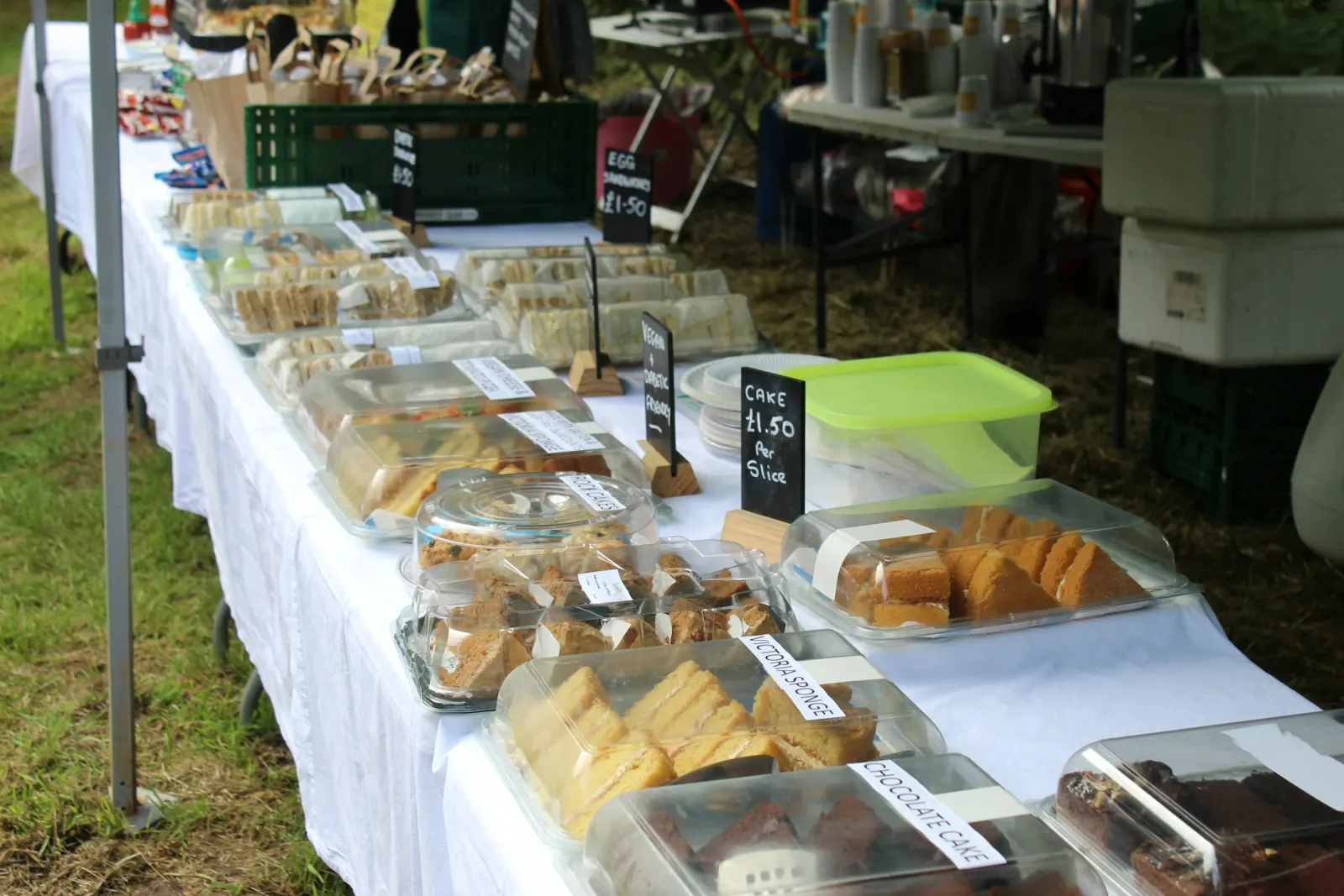
Every September, a parent council or club committee tends to face the same list: chocolate sale, spaghetti supper, car wash, donation campaign. Sometimes the choice comes down to habit (“we do it every year”) or to whichever supplier called first. Yet the right fundraiser depends mostly on four things the committee already knows: how much you need, how many reliable volunteers you have, how much money is in the bank account, and what is already happening around you.
This article takes those four questions one at a time, with what research and public data say about each. At the end you will find a decision grid your committee can fill out in a single meeting.
Question 1: how much, and for what
A specific amount motivates more than a general wish
Goal-setting theory is one of the best-documented theories in workplace psychology. In their 2002 review in the American Psychologist, Edwin Locke and Gary Latham summarize nearly 35 years of research: specific, challenging goals improved performance on more than 100 different tasks, involving more than 40,000 participants, in at least eight countries, compared with the vague instruction to “do your best.”
These studies mostly involve employees and students. They were not designed around volunteers selling chocolate. Two of their findings still apply well to a committee:
- The goal has to be specific. “Raise $4,800 for the bus for the Québec City trip” gives a target. “Fund this year’s activities” does not.
- People need to know where they stand. According to the same authors, a goal combined with regular progress feedback works better than the goal alone. Without an up-to-date number, nobody knows whether to speed up.
Donors like to see the finish line coming
Another series of studies deals directly with fundraising. Cynthia Cryder, George Loewenstein and Howard Seltman followed microloans on the Kiva website. The pace of contributions went from 6.7% of the remaining amount per hour when a project was less than one-third funded, to 10.8% between one-third and two-thirds, then to 12.8% in the last third. A field experiment with a local organization and a lab experiment pointed in the same direction. The proposed explanation: a contribution that helps finish the job feels more useful.
For your committee, the takeaway is simple. A goal that is numbered and posted lets you announce “we’re $600 short” in the last week, a message that has a good chance of working. A vague goal does not.
The amount determines the activity
Next, work the math backwards. Divide your target by the net profit on one unit (a box, a ticket, a meal). If you are aiming for $4,800 and each box leaves you $5 in profit, you need to sell 960 boxes. With 40 families, that is 24 boxes per family. If that number makes the committee smile, the activity is too small for the goal, or the goal needs to be split across two activities.
Question 2: how many reliable volunteers
The volunteer pool has shrunk
The picture has changed since the pandemic. According to Statistics Canada’s Survey on Giving, Volunteering and Participating, published in June 2025, 32% of Canadians aged 15 and older volunteered for an organization in 2023, compared with 41% in 2018. These roughly 11 million people gave about 1.2 billion hours, 28% fewer than in 2018.
Quebec starts from a lower level. In 2018, before the drop, the Institut de la statistique du Québec (Quebec’s statistics agency) measured a formal volunteering rate of 32.5% in Quebec, compared with 41.1% for Canada as a whole.
A minority does most of the work
Volunteering is also highly concentrated. In the 2013 survey, the last one to publish this calculation, 53% of volunteer hours were done by 10% of volunteers, who gave 372 hours or more per year. The same survey named the two main barriers for non-volunteers: lack of time (66%) and being unable to make a long-term commitment (62%).
On a committee, this means the list of people who raised their hand in September almost always overestimates how many will show up on the Saturday of the supper. Count only the people who have already seen a task through to the end.
A rough scale to get your bearings
A benefit supper or an auction needs a lot of people on the same day: setup, cooking, serving, cash, cleanup. A pre-order sale needs few people on any given day, but a lot of follow-up over several weeks, then one big distribution day. An online donation campaign mainly needs one person who writes and follows up.
One documented example shows how far a very small group can go, as long as it puts in the time. In Cadillac, in Quebec’s Abitibi-Témiscamingue region, three mothers raised nearly $50,000 over three years for the schoolyard at École Louis-Querbes, which had about fifty students, according to Radio-Canada in 2015. They spread the effort over three years.
Question 3: can you put money up front
Events cost a lot for each dollar raised
Before choosing a supper or a gala, look at what you have to pay before selling the first ticket: hall, food, permits, decorations, printing. In the philanthropy world, the most widely cited benchmark comes from James Greenfield, author of handbooks on fundraising management. In his view, at best, an event costs about 50 cents for every dollar raised. This benchmark comes from the author’s experience. It was not measured on a sample.
Measured figures vary widely, and they are disputed. In 2007, the American charity evaluator Charity Navigator calculated from tax returns that organizations spent an average of $1.33 for every dollar raised by their special events. Critics replied that the study read only one line of the tax form and missed some of the revenue, such as sponsorships. The main thing to remember is that an event’s margin is thin, and a bad night can lose money.
A Canadian benchmark for charities
If your group is a registered charity, the Canada Revenue Agency monitors the ratio between your fundraising costs and the revenue they bring in. According to its guidance CG-013 (updated April 20, 2012, and consulted in October 2026), below 35%, “this ratio is unlikely to generate questions or concerns by the CRA”. From 35%, it looks at the average over recent years. Above 70%, the ratio “will raise concerns with the CRA” and the organization will have to justify it. A school or club that is not registered is not covered by this guidance, but the 35% threshold is still a good benchmark for the committee.
The rule of thumb
If the bank account is empty, start with an activity that requires no upfront money: a pre-order sale, where the supplier invoices after orders close, or a donation campaign. Save the supper for the year when a first success has filled the account. Also ask the supplier, in writing, what share of the selling price comes back to you. That is the number you use for the calculation in question 1.

Question 4: what is already happening around you
Asking annoys people, but the effect on giving is debated
Parents at the same school often get several requests within a few weeks: the class, the soccer team, the Scouts, the hospital foundation. The fear of wearing people out is real. The research that has measured it paints a more nuanced picture than you might think.
In the Netherlands, Merel van Diepen, Bas Donkers and Philip Hans Franses ran a field experiment with five of the country’s largest charities. They varied the number of letters households received. The result: the letters did cause irritation, but that irritation changed neither stated nor actual donations. In another study drawn from the databases of three organizations, the same researchers conclude that requests from different organizations add up in the short term, but compete for the same household budget in the long term.
These studies look at donations requested by mail. Product sales were not measured. They still suggest two things. One more request is not a disaster. However, over a year, families have a limited budget, and what the hockey team gets in November will no longer be available for the school’s sale in December.
Not every community has the same budget
Family budgets also vary from one neighbourhood to the next. In 2018, Radio-Canada compared elementary schools in the Halifax area. Sir Charles Tupper School, in a neighbourhood where average family income was about $130,000, raised an average of $70,000 a year, or $360 per student. Joseph Howe School, in a neighbourhood where that income was about $55,000, raised $15,000, or $82 per student. If your community looks more like the second one, a realistic goal takes that ceiling into account, and an activity that brings in money from outside the circle of parents becomes more valuable.
What to check
Before setting a date, look at:
- the calendar of the school, the school board or school service centre, and the municipality;
- campaigns by other groups that ask the same families (sports, Scouts, choir);
- families’ big expenses: back to school, the holidays, sports registration;
- weekends already taken by a local tournament or festival.
A phone call to the neighbouring committee often prevents two chocolate sales in the same week.
Three documented examples
These three Canadian examples come from Quebec.
École du Boisjoli, in Sherbrooke
In February 2024, École primaire du Boisjoli, an elementary school with 615 students, launched a campaign to redo its schoolyard, according to La Tribune. The full project cost $470,000. The school had set an initial goal of $100,000 over three years and had already collected $110,000, including $50,000 from its foundation. The activities were varied: a Valentine’s Day family party, a booth at the home show, a wrestling gala, an end-of-year show. The project had been split into two phases, with a first deadline at the start of the 2024-2025 school year. A big project thus becomes a series of specific goals, each with its own date.
École Louis-Querbes, in Cadillac
The case already mentioned above shows the other end of the spectrum: three volunteers, a small school, nearly $50,000 raised over three years. Time made up for the small number of volunteers.
École secondaire des Chutes, in Shawinigan
In October 2026, Le Nouvelliste reported that students at École secondaire des Chutes, a high school, had run roadblock fundraisers with the Sunny Foundation. The activity brought in $18,044, of which $9,022 went to the school for trips abroad and the football team. The school therefore split the revenue equally with its partner. That is an option when you are short of hands to organize, as long as the split is known in advance.
The decision grid
First, fill in the four answers as a committee. Then rule out the activities that don’t fit.
| Your answers | Activities that fit | Avoid for now |
|---|---|---|
| Fewer than 5 reliable volunteers, empty bank account | Online donation campaign, pre-order sale with a short catalogue | Supper, auction, tournament |
| 5 to 15 volunteers, empty bank account | Pre-order sale, peer-to-peer fundraising, car wash | Supper for more than 100 people |
| 5 to 15 volunteers, a bit of money in the account | Add a small event: breakfast, bake sale | Gala in a rented hall |
| More than 15 volunteers, money in the account | Benefit supper, auction, tournament with sponsorships | Nothing is off limits, but calculate the cost per dollar raised |
| High goal (more than $10,000) | Two complementary activities, or a project split into phases | Betting everything on a single evening |
| Families already asked a lot | Activities that reach outside: shared online donations, business sponsorships | A third product sale in the same season |
Then run the numbers for the activity you chose:
- Goal: what net amount, for what project, by what date?
- Unit: how much does a box, ticket or meal bring in once the supplier is paid?
- Volume: how many units do you need to sell in total, and how many per family or per player?
- Hands: how many volunteer hours are needed, and who has promised them?
- Money up front: how much do you have to pay before collecting, and what do you lose if the activity is cancelled?
- Date: what other requests will the same families receive that month?
If any line is left blank, the activity is not ready.
Once the activity is chosen, platforms like Coolecto let you take orders or donations online and show progress toward the goal. Choosing the activity remains a committee decision.
In short
- A specific goal, with a number and regular tracking, motivates more than a general aim, and people give more readily when the end is in sight.
- Formal volunteering has dropped in Canada (from 41% in 2018 to 32% in 2023), and it is lower in Quebec. Count only the volunteers who have already proven themselves.
- Events cost a lot for each dollar raised. With no money in the account, start with an activity that needs no upfront money.
- Requests annoy people without necessarily hurting donations, but families have a limited yearly budget. Check other groups’ calendars before setting your date.
- Fill out the grid as a committee and do the volume calculation before signing with a supplier.